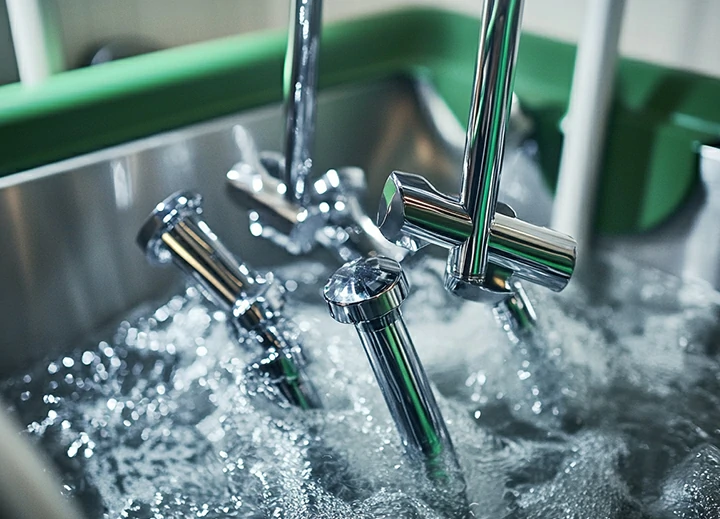
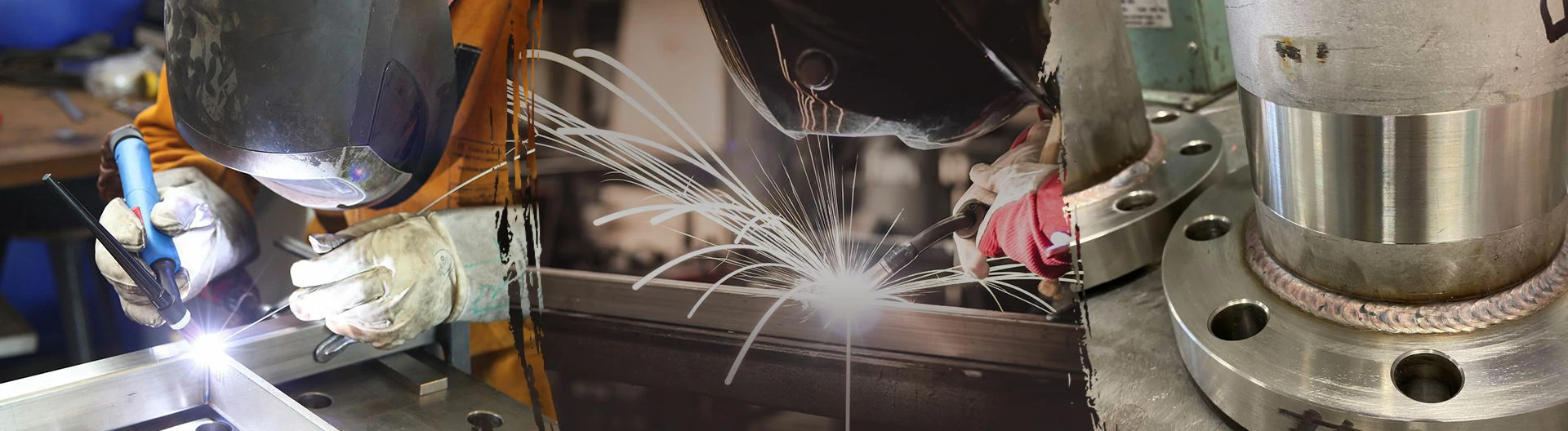
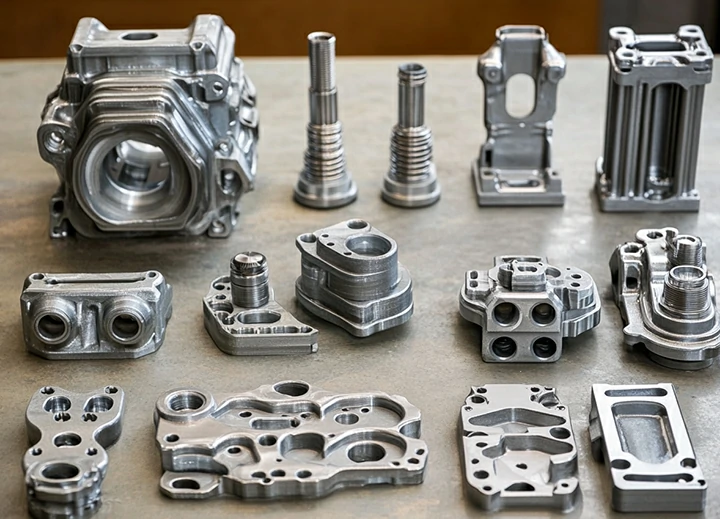
After completing the welding process, we offer a range of surface treatment options to meet customer requirements and enhance the performance, durability, and appearance of the welded components.
Our surface treatment capabilities are designed to meet specific functional and aesthetic needs, ensuring that the final products meet the highest standards. We collaborate closely with our customers to determine the most suitable surface treatment based on their specific requirements, including environmental conditions, functional needs, and aesthetic preferences.
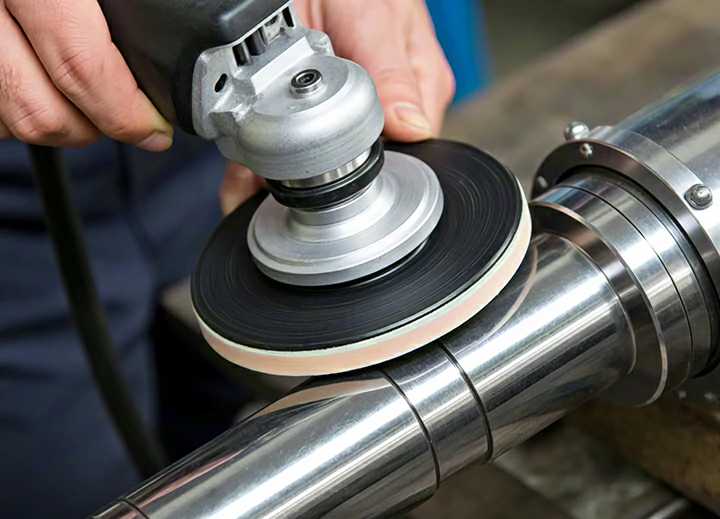
Through methods such as mirror polishing, satin polishing or electro polishing, burrs, scale, etc. on the surface of the welded parts are removed to make the surface smooth and shiny.
For some welded parts with high requirements for surface finish, such as the welded parts of food processing equipment, medical devices, etc., polishing treatment can not only improve the aesthetic appearance but also prevent the adhesion of dirt and bacteria, making it easy to clean and disinfect.
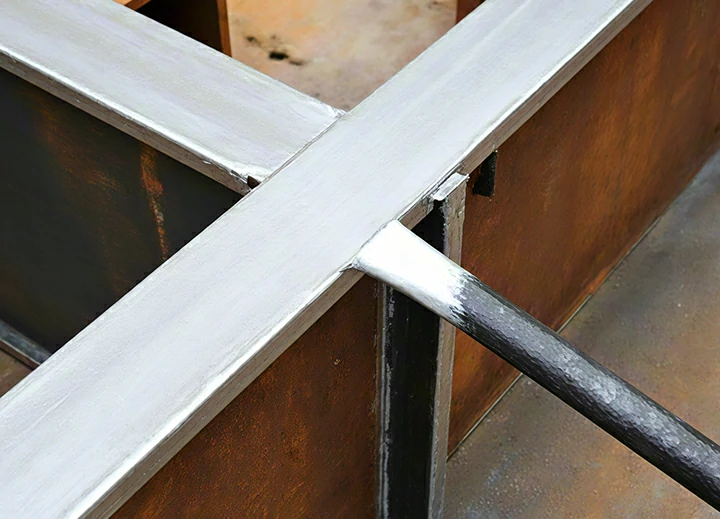
The coating is applied to the surface of the welded parts. After drying, a protective film is formed to isolate air, moisture, and corrosive media.
It is widely used in various metal welding structures, such as construction steel structures, automotive body welded parts, etc. Different types of coatings, such as anti-corrosion paint, fireproof paint, high-temperature resistant paint, etc., can be selected according to different usage environments and requirements to meet the protection and decoration needs of the welded parts.
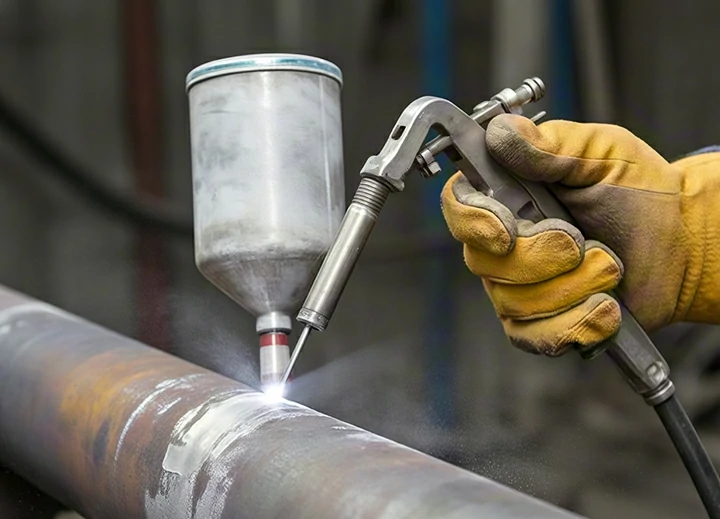
The plastic powder is sprayed onto the surface of the welded parts through a spray gun, and a plastic coating is formed after heating and curing.
It is often used for the surface treatment of welded parts of household appliances, furniture, and other products. It can provide good wear resistance, corrosion resistance, and decorative properties, and also has the advantages of environmental protection and non-toxicity.
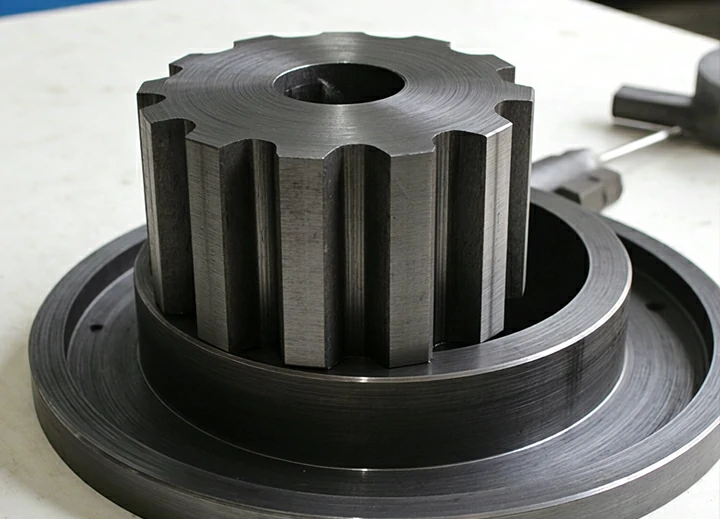
A black oxide film is formed on the metal surface, and its main component is magnetite (Fe₃O₄).
It is often used for the welded parts of steel products, such as tools, mechanical parts, etc. It can improve the corrosion resistance and appearance quality of the parts, and also has a certain anti-rust effect.
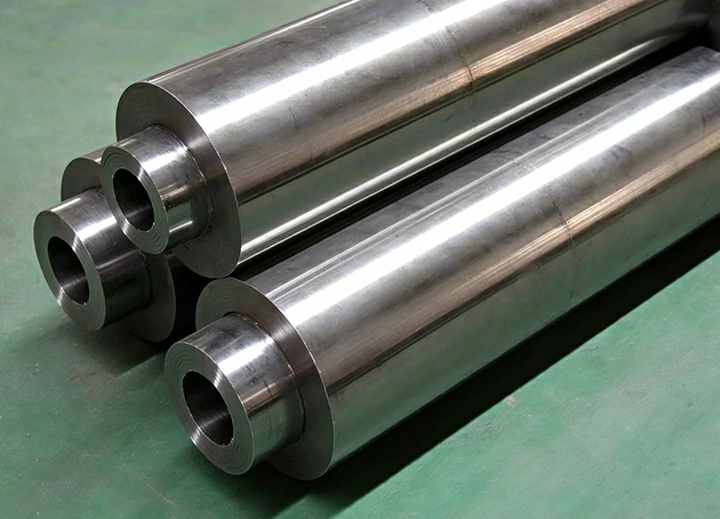
By using a passivation agent, a dense passivation film is formed on the metal surface, thereby improving the corrosion resistance of the metal.
It is often used for the treatment of welded parts of metals such as stainless steel. It can effectively prevent the stainless steel from rusting during use and maintain its surface luster and corrosion resistance.
Using the principle of electrolysis, a metal or alloy coating is deposited on the surface of the welded parts to improve the surface properties of the welded parts.
According to different needs, nickel plating, chrome plating, zinc plating, etc. can be selected. Nickel plating can improve wear resistance and corrosion resistance and is often used for the welded parts of mechanical parts; chrome plating can make the surface of the welded parts have high hardness and good luster and is often used for welded parts with high decorative requirements; zinc plating is mainly used to improve the atmospheric corrosion resistance of the welded parts, such as some welded parts of steel structures used outdoors.